Published on
January 2, 2026


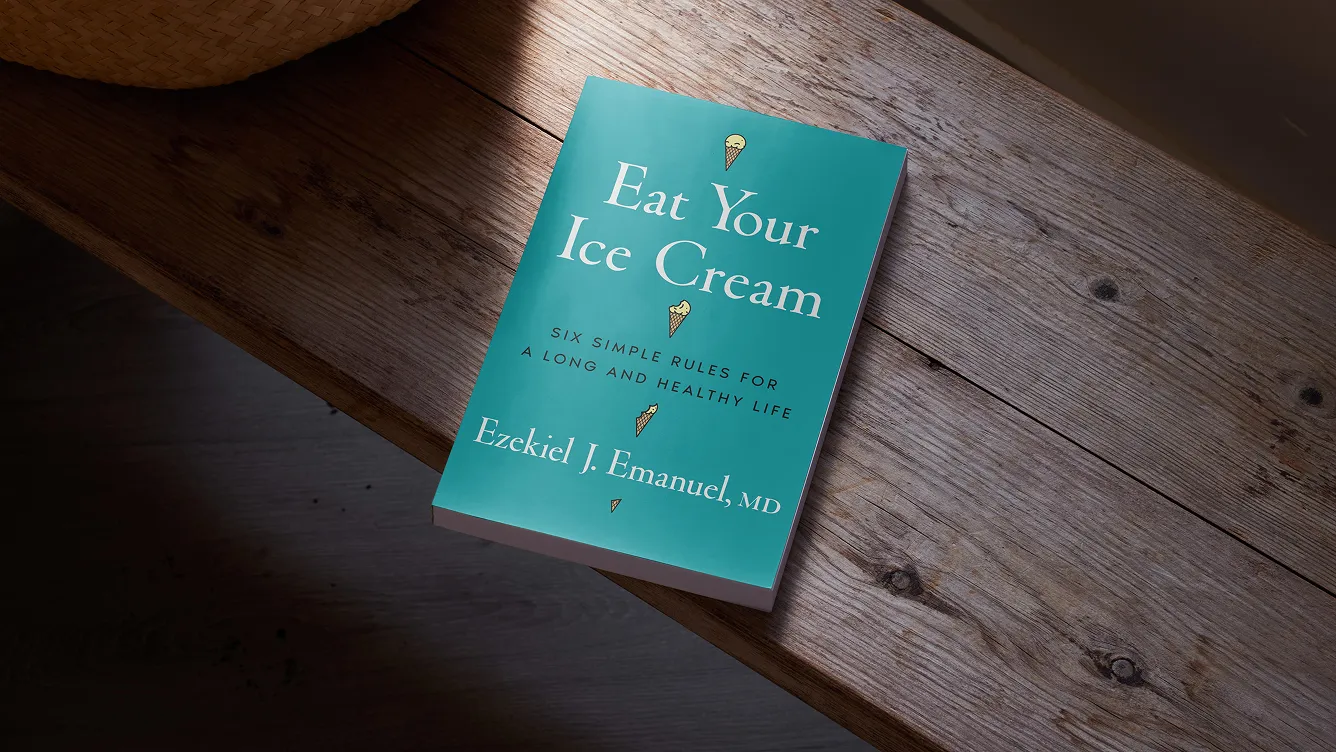
What if the secret to living a full and healthy life isn’t to be found in expensive, unsustainable wellness fads and supplements, but in prioritizing practices we’ve known for centuries? That’s the foundation for the great new book by Dr. Ezekiel Emanuel, renowned physician and professor at the University of Pennsylvania. Wellness, he argues, should be a lifestyle, not a life-consuming second job. I recently sat down with him for a wide-ranging conversation on why you can ignore the Wellness Industrial Complex, the most important things you can do for your health right now, what people misunderstand about retirement, the importance of joy, and how the pursuit of “more time later” shouldn’t steal the time you have now. What I love about the book is how it pairs ancient wisdom with rigorous science. You’ll come away with the knowledge of what you can ignore in the wellness world and what you should definitely pay attention to. You can find out more about the book here.
Arianna Huffington: In his farewell speech, Eisenhower warned of the military-industrial complex and its “acquisition of unwarranted influence.” You argue that the “Wellness-Industrial Complex” now has a lot of unwarranted influence and has turned health into another arena for burnout. What are the elements of the Wellness-Industrial Complex and how did we reach a point where people are exhausted from trying to be well?
Ezekiel Emanuel: The Wellness-Industrial Complex is the sprawling ecosystem of advice-sellers–books, podcasts, newsletters, influencers, “coaches,” supplement brands, gadget companies, and self-proclaimed sages — who promise “more time” later while demanding huge amounts of time, attention, and money right now. There is too much of this health guidance — often contradictory, novelty-chasing, and riddled with medical-sounding language that makes marginal, speculative, unproven, and even absurd interventions feel urgent.
Members of the Wellness-Industrial Complex have 3 characteristics:
Arianna Huffington: You write about how much the health conversation is driven by over-extrapolating from outlier studies or even straight misinformation. So which wellness habits are people investing huge amounts of energy into that deliver almost no meaningful benefit?
Ezekiel Emanuel: Cheat codes and “biohacking” regimens are built around pill concoctions, cold plunges, and complicated protocols that consume time and money without any proven return in terms of hours, much less days, months or years.
A classic example is extrapolating from animal or lab findings to humans — rapamycin and resveratrol are widely touted because they extend lifespan in worms and mice but there’s no evidence they extend the human lifespan. That kind of “biology lesson” is often just a waste of your time.
Thus, a lot of our energy goes into interventions that are based on animal data but remain unproven in humans, have marginal returns, or are ultimately unprovable because of our inability to isolate behavioral or dietary changes in people in the same way.
Arianna Huffington: Optimization has become an obsession for so many people, and obviously it’s being driven by technology, which makes it easy to get lost in the data. What is the scientific case for letting go of extreme optimization and how can people give themselves permission to do less?
Ezekiel Emanuel: The case is simple: your willpower is easily fatigued. Extreme “do-everything-at-once” programs reliably fail. No one can sustain the level of willpower that such programs require. That is why I tell people to stay away from challenges that demand simultaneous, extreme changes like the 5 days to healthier, happier eating or the 75 Hard Challenge or 30 Day Wellness Challenge. They will not result in lifelong benefits and are bound to fail.
Stop being obsessed with wellness. It should not be a second job. And it should not be the sole focus of your life. Wellness is a means to help you live how you want to live, and enjoy a long, healthy, and happy life. It should be a lifestyle, not life-consuming.
Follow 6 simple, well established behaviors that you enjoy so that they become healthy habits that you do regularly for many years (after all, you want to live a long time) and produce the most benefits. The key is to focus on changes that actually matter, one at a time, and build routines so health becomes a habit that you don’t have to think about, like brushing your teeth or having a cup of coffee in the morning.
Arianna Huffington: What do you think should count as “success” when it comes to health?
Ezekiel Emanuel: Let’s begin with what success is not: It is not a perfect biomarker, or a threshold number of steps, or a perfect squat. Nor is it a joyless, singular quest to maximize one’s lifespan.
Success is being able to live deep and suck out all the marrow of life, with enough health to do the things — and be with the people — that make life worth living. It is feeling healthy, energetic, with few chronic aches and pains, and being fulfilled and joyful. If you are always forcing yourself to do more exercise or feeling like you have to deprive yourself of foods you like — that is not a matter of wellness. That is obsessive self-denial and it is not going to last. Even if it does, you will be unhappy.
Arianna Huffington: One of your rules, “Eat your ice cream,” is about the role of pleasure and joy in a long life. What does the research show about joy as a biological and behavioral driver of wellbeing?
Ezekiel Emanuel: My argument is that pleasure and repetition aren’t indulgences, they’re tools for adherence to habits that make and keep you healthy. If wellness feels like endless deprivation, you won’t stick with it for the long haul — and the long haul is what people want.
“Eat your ice cream” is a concrete example of how moralizing food can be wrongheaded: despite ice cream seeming like nutritional disaster, observational data have found it associated with better outcomes. Among diabetics, half a cup a day was associated with a lower risk of health problems, and among overweight people it was associated with reduced odds of insulin-resistance syndrome. And the most recent study just showed that full fat dairy in the form of cheese and cream — yes the cream in ice cream — are associated with lower risk of dementia. As the authors say: “research show[s] that certain fermented dairy products are not harmful — and may even be beneficial — for cardiovascular health, which is closely linked to brain health.”
The point isn’t to “eat unlimited ice cream.” It’s to enjoy treats occasionally, without obsessing, and build a way of eating that you can easily and happily live with for decades.
Arianna Huffington: Your book says friendships and connection predict health more strongly than diet, sleep, or exercise. Why do we ignore social connection when it is arguably the most important longevity metric?
Ezekiel Emanuel: Because social connection is not as flashy and doesn’t sell as well as gadgets, pills, and “hacks” and it is harder to quantify than steps or grams of protein. But the data are stubborn. Loneliness is as unhealthy as smoking 15 cigarettes a day. Social isolation increases the risk of premature death by 29%.
Conversely, the Whitehall II cohort in Britain showed that more frequent social contact around age 60 was associated with lower dementia risk, and the signal was strongest for contact with friends.
A study of about 20,000 middle-aged Americans found that having friends is associated with a 24% lower risk of dying during the subsequent eight years. And the Harvard Study of Adult Development concluded that “the people who were happiest, stayed healthiest as they grew old, and who lived the longest were the people who had the warmest connections with other people.”
Social life is also one of the easiest places to get “wellness grand slams.” My own example is running with a friend: exercise, nature, and the talking that make relationships rich are all there in one routine.
Maybe best of all, engaging in social relationships is good for your own health…and the person you are spending time with who is also getting health benefits. Thus you can also be virtuous by engaging in social interaction, that is you can help others.
Arianna Huffington: And more broadly, you also talk about sleep, movement, food — they are actually incredibly powerful medical interventions and yet they’re still talked about as soft, fuzzy wellness practices. How can we elevate our daily behaviors to the status they deserve, as powerful, first-line medical interventions?
Ezekiel Emanuel: The big challenge is that wellness behaviors in terms of sleep, eating well and exercise are prevention…and the health care system does not do prevention well. Getting medical schools and health systems to educate students and patients about prevention is important. They do a terrible job now and we have to get them to take this seriously.
We also have to emphasize and quantify the health benefits of these wellness behaviors both for cognitive functioning and longevity. Then we need to develop a consensus about the few key changes people can make in each of these areas — like stopping to drink sugary beverages and stopping to eat packaged cakes and cookies or just walking everyday for a mile or two.
We also need to link wellness behaviors to all the good they do — emphasizing that “what is good for our hearts is also good for our heads.” Behaviors that enhance cardiovascular risk factors early can be consequential for cognitive aging.
Arianna Huffington: You challenge the idea that the key to longevity lives in micro-doses, blood tests, gadgets, or supplements. What does decades of data actually say about the biggest levers for a longer life? What are the biggest fads we can ignore and what are the core truths that we definitely should not ignore?
Ezekiel Emanuel: The biggest levers are not fads but what humans have known for centuries — having good friends and family, eating well, avoiding processed foods, exercising, and not taking unreasonable risks. These are all “boring” but powerful. The fads to ignore are the ones built on extrapolation and hype, like “take rapamycin because it extends the mouse lifespan.”
Another major supposed wellness behavior that can be ignored are supplements: Americans spend billions on vitamins and 75% of seniors take them, yet multivitamins have not proven beneficial for major outcomes like heart disease, cancer, or dementia.
A few supplements are useful for specific populations. For example, folate, or vitamin B9, is necessary for women considering pregnancy to prevent neural tube defects. Vitamin B12 is useful for vegans and older adults who won't get this vitamin in their diet or whose stomachs don’t produce acid or the intrinsic factors required for its absorption. But the average person does not need these supplements. Plus, thanks to Congress, supplements remain unregulated and have been found to contain dangerous contaminants.
Core truths: don’t chase novelty; build routines and focus on behaviors you can sustain because our time and attention are finite, and the Wellness-Industrial Complex will happily consume both.
Arianna Huffington: You have a provocative take on retirement — that it often accelerates cognitive decline. What should people do instead of traditional retirement to protect their brain health?
Ezekiel Emanuel: Many jobs unintentionally protect brain health by requiring regular cognitive effort: learning new information, solving problems, navigating schedules, and interacting with other people. When people retire and those demands disappear, the brain often loses that daily workout.
The evidence isn’t perfectly uniform, but taken together it suggests that retirement is at best neutral — and often harmful — when it leads to an unengaged lifestyle. Memory decline, cognitive impairment, and even dementia appear more likely when people stop challenging their brains altogether. One of the most interesting studies shows that countries where people retire early like Greece, have more rapid and earlier cognitive decline compared to countries where people retire at older ages, such as Switzerland and the USA.
The solution isn’t to “never retire.” It’s to replace work with something equally mentally demanding and engaging: structured learning, sustained hobbies, teaching, volunteering, or any activity that requires real thinking and social interaction. The key is commitment and repetition, not dabbling.
I like to point out that Benjamin Franklin invented retirement for the working man. He was such a successful printer that he was able to retire at age 42. And everything we know him for — his inventions, his scientific advances, his diplomacy, his autobiography, his civic improvement efforts, etc. — were things he did AFTER he retired. He stayed active and continued to contribute to the world to make it better.
Arianna Huffington: So many people define themselves by their jobs, which can be confining and limit being open to other possibilities. How can people find meaning and purpose in their work, but not be defined by it, which can also make retirement much harder?
Ezekiel Emanuel: Work plays an important role in many people’s lives because it provides structure, cognitive challenge, and social interaction. Those elements, not the job title itself, are what matter most for long-term brain health and wellbeing.
Problems arise when work becomes the only source of mental engagement and purpose. When people retire without replacing those demands, they often slide into a more passive, unengaged routine, which is exactly what the brain does not need as we age.
The key is to begin cultivating other structured, cognitively demanding activities well before retirement — things that require learning, effort, and regular participation. That might include volunteering at a school or food bank or animal shelter, continuing education to learn about history or something you did not get to in school, participating in book groups, learning a language or musical instrument, or pursuing other complex hobbies that involve both thinking and social interaction.
When people do this, work can remain meaningful without being their sole anchor. Retirement then becomes a transition to different forms of engagement, rather than a sudden loss of purpose or mental stimulation.
New activities and engagement with other people keeps you mentally healthy and fulfilled.
Arianna Huffington: Curiosity emerges as one of your most important “non-physical” habits. What does neuroscience tell us about why lifelong learning protects cognitive function?
Ezekiel Emanuel: Like your muscles, the key to brain health is “use it or lose it.” Lifelong learning matters because the brain responds to use. The connections between neurons are strengthened the more you use them. Activities that require sustained thinking, learning, and problem-solving help keep the mind sharp as we age. What consistently shows up in research is that people who remain mentally engaged — through education, reading, discussion, and learning new skills — maintain better cognitive function longer. Yes, it takes effort to be mentally engaged, but it is rewarded with slower cognitive decline as we age.
People may experience cognitive decline at similar rates, but those who stay intellectually active tend to function well for longer before impairments interfere with daily life. In other words, mental engagement doesn’t make aging disappear, but it can delay when its effects become limiting.
One important distinction is that the activity has to be genuinely demanding and sustainable. Continuing education, book groups, learning a new language or instrument, or developing a serious hobby all work when they involve real effort and regular participation. Simply consuming information passively isn’t enough — the brain benefits most when it is challenged, tested, and engaged over time.
Arianna Huffington: Thrive is built around microsteps. What are the smallest possible actions someone can take tomorrow morning to begin improving their health — without adding pressure or stress? Can you give us your favorite microstep for each of your six rules?
Ezekiel Emanuel: The most important microstep is this: don’t try to change everything at once. Pick one small action you can repeat regularly without stress. Health improves through consistency, not intensity.
Here’s one low-pressure microstep for each of the six rules:
None of these require perfection. The goal is to make health a habit, something you can sustain and build into everyday life, not another source of pressure. And make it enjoyable so you look forward to doing it.
Arianna Huffington: The whole point of a routine is that it should be sustainable, and you outline four steps for creating sustainable routines. Which one do people get wrong the most and how can they fix it?
Ezekiel Emanuel: The key to making a wellness behavior a habit that is sustained is repetition. The four steps are 1) motivation, 2) initiation of the activity, 3) repetition and 4) habit formation.
People reading a book or this column have the motivation to change. They also willingly start wellness behaviors, like exercising. The problem is that too often, people can’t sustain it. For instance, by February, 80% of all New Year’s resolutions are in the dustbin. Thus, as I say, repetition is the key and the real challenge is keeping up the momentum. In general, a new behavior has to be repeated 3 to 4 times per week and then sustained for 6 weeks before it becomes a routine. That is how much willpower you need to exert to build habits for life.
So repeating things 4 times a week for 6 weeks is the key. The initial buy-in is the part that people get wrong too often.
Arianna Huffington: What is one misconception about health you most want to forget and one truth you want everyone to carry with them?
Ezekiel Emanuel: It is widely believed that longevity lies hidden in some complicated, expensive, joyless optimization stack and that you’re failing if you aren’t doing it.
In reality, wellness is supposed to help you live deeply and enjoy daily activities in life. That means prioritizing habits with real evidence, making them sustainable, and not letting the pursuit of “more time later” steal the time you have now.
The one truth that I want people to adopt today is to prioritize social relationships, whether by spending time with close friends or engaging the people you routinely interact with. Improving social relations is the most important wellness behavior and the science supports that even introverts have much to gain by “acting extroverted” and initiating conversations. That is the most important wellness activity you can do in 2026 —make time to talk to people every day.
.webp)


Arianna Huffington is the founder and CEO of Thrive Global, the founder of The Huffington Post, and the author of 15 books, including international bestsellers Thrive and The Sleep Revolution. In 2016, she launched Thrive Global, a behavior change technology company with the mission of improving health outcomes and productivity.
Originally from Greece, she moved to England when she was 17 and graduated from Cambridge University with an M.A. in economics. At 21, she became president of the famed debating society, the Cambridge Union. She has been named to Time Magazine's list of the world’s 100 most influential people and the Forbes Most Powerful Women list.
.webp)
Ezekiel J. Emanuel, MD is a vice provost and professor at the University of Pennsylvania. A bioethicist, health policy expert, and oncologist, he was one of the architects of the Affordable Care Act. He is a regular guest on CNN and MSNBC and often contributes to the New York Times, Washington Post, Wall Street Journal, and Atlantic. He lives in Washington, DC.